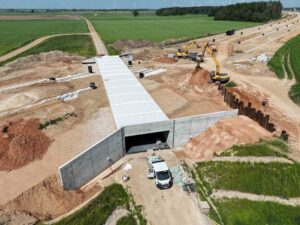
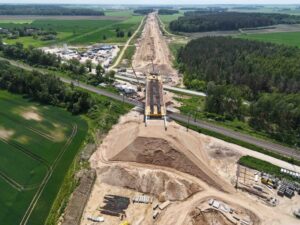
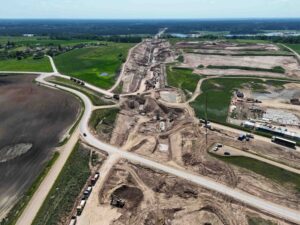
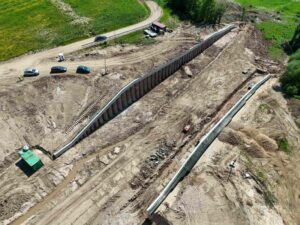
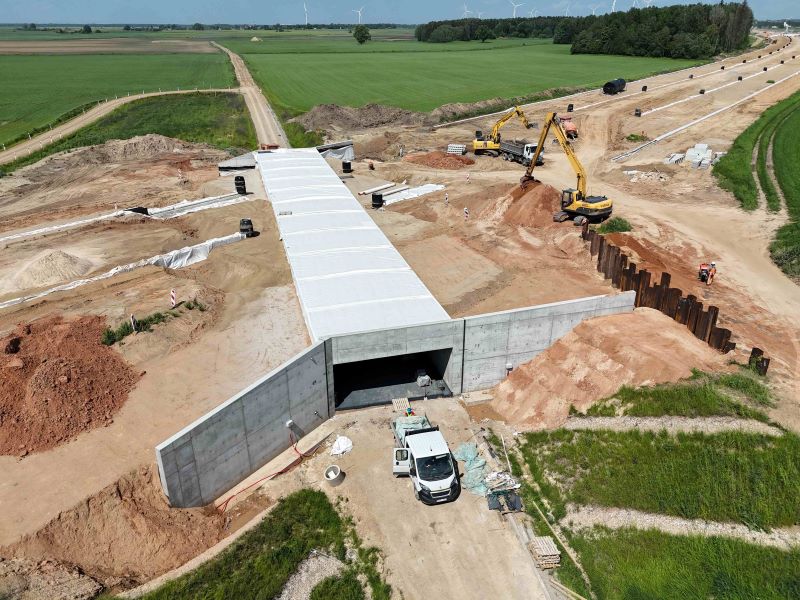
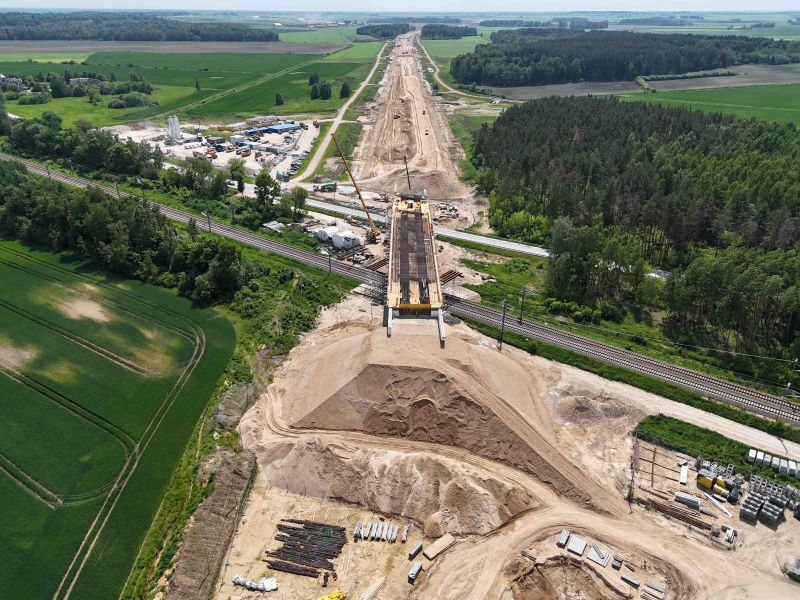
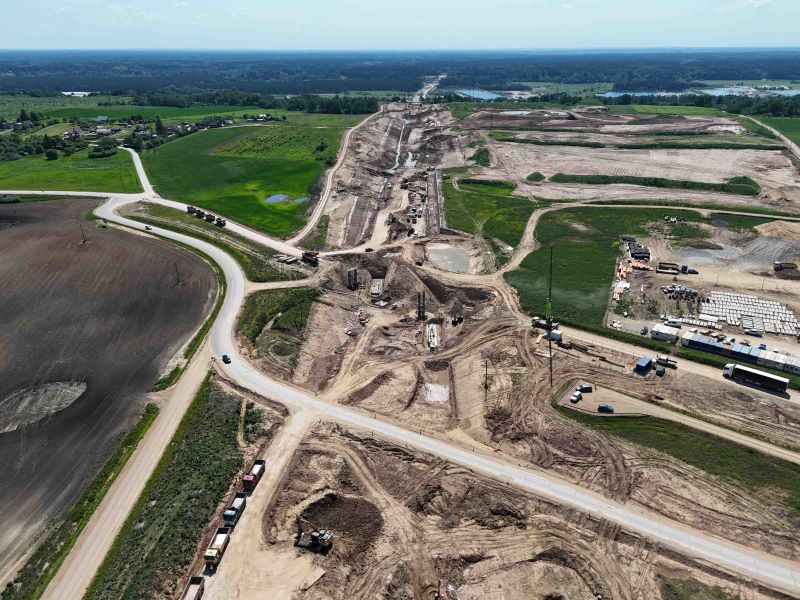
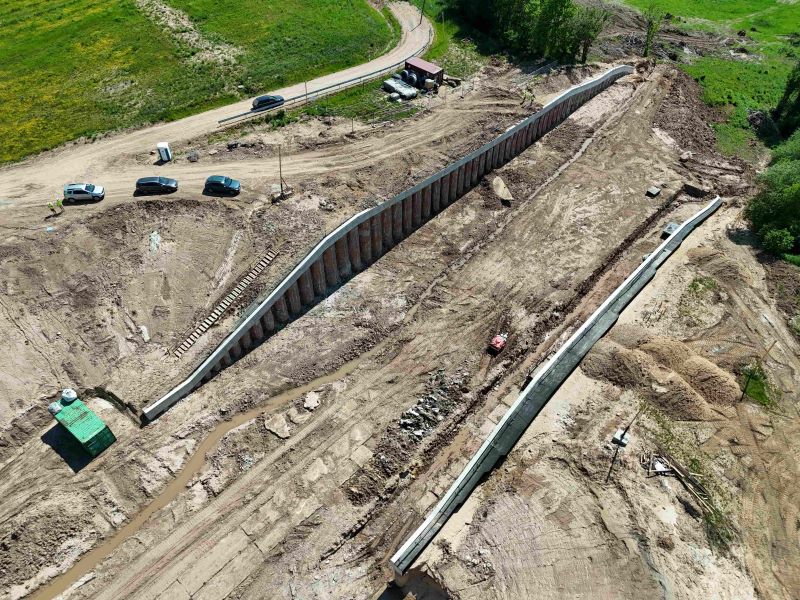
Lithuania, the first of the three Baltic States to start construction of the European gauge Rail Baltica line, is ramping up construction: this year, contracts are to be signed for new sections of the railway embankment and work is planned to be carried out on a section of about 70 km. Next year, the installation of embankment works is expected to extend for another 49 kilometres towards Panevėžys.
“The project is complex and unique both in Lithuania and the Baltic region. The strategic integration into the European rail network will indirectly boost GDP growth in the Baltic region by 0.5-0.7 percentage points per year. It is estimated that by 2046 Rail Baltica will be used by 51.7 million passengers and 10.9 million tonnes of freight will be transported,” said Egidijus Lazauskas, CEO at LTG Group.
Construction work is currently underway on two parts of the section towards the Latvian border: the 10 km Šveicarija-Žeimiai section and the 17.7 km Žeimiai-Šėta section. Next year, the construction front in Lithuania will expand on a section of more than 110 km.
The change in the project management model, previously centralised and managed solely by the coordinating company RB Rail AS, is helping to speed up the pace of construction. This year, the Baltic States agreed on autonomous management for each state, which is speeding up decision-making, implementation, and management processes. The full handover of Rail Baltica works is expected to take place by the end of this year.
“One of the solutions to speed up work is an updated project governance model, which will allow us to work faster and smoother. Despite the challenges, the decisions we have taken are contributing to the common goal of the Baltic States and the EU. Our goal remains unchanged – to complete the project in 2030,” said Lazauskas.
Last week, it was announced that construction work on the Rail Baltica main line has started in Latvia as well. At the time, Catherine Trautmann, the European Coordinator for the North Sea-Baltic TEN-T Corridor, of which Rail Baltica is an important part, stressed the strategic importance of the Rail Baltica project for European security, noting the position of NATO representatives that the project must be completed on time, and that funding “can and must be found”.
The implementation of the international project will have an impact not only on the population of the Baltic States and travel security, but also on national economies and national security, including optimisation of military mobility. For example, in the event of armed conflict, up to 143,000 inhabitants could be evacuated by Rail Baltica in one day from the Baltic capitals to Poland.
According to Marius Narmontas, COO and Board Member at RB Rail AS, the active construction that has started in Latvia is also an important milestone that shows the progress of the project.
“This year we will see more than 150 km of the Rail Baltica main line under construction in all the Baltic States. While there are still many challenges and targets to be met, the success of the next phases will depend on the cooperation of the project partners and contractors, as well as on careful planning, monitoring and execution of the programme,” said Narmontas.
Rail Baltica is the largest railway infrastructure project in the history of the Baltic States, during the implementation of which an electrified European-standard two-track railway will be built, connecting Warsaw, Kaunas, Vilnius, Panevėžys, Riga, Parnu and Tallinn. The total length of the Rail Baltic railway line in the Baltic States is 870 km: 392 km in Lithuania, 265 km in Latvia, and 213 km in Estonia.
 LTG