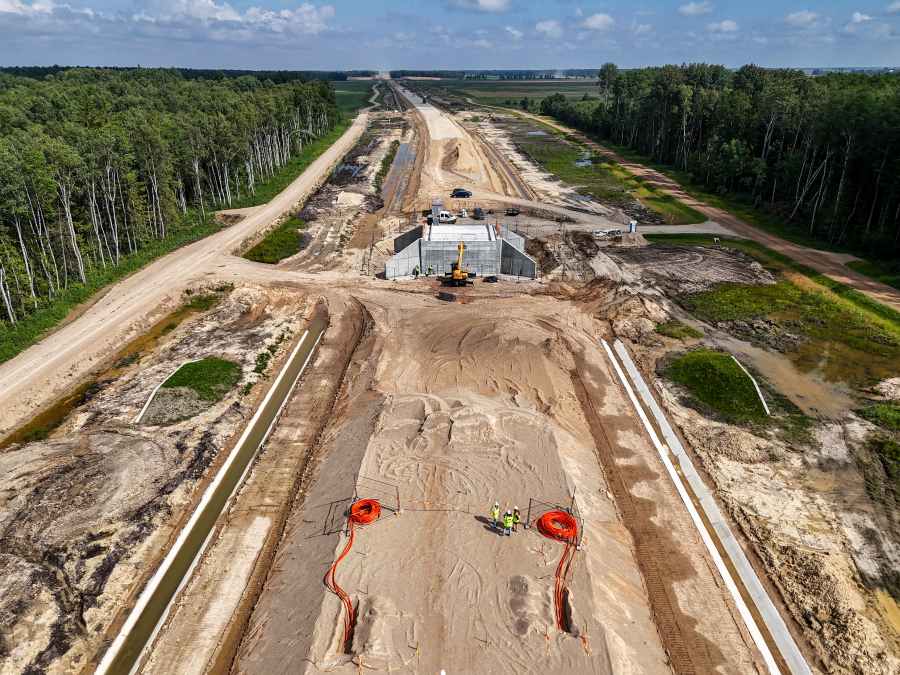
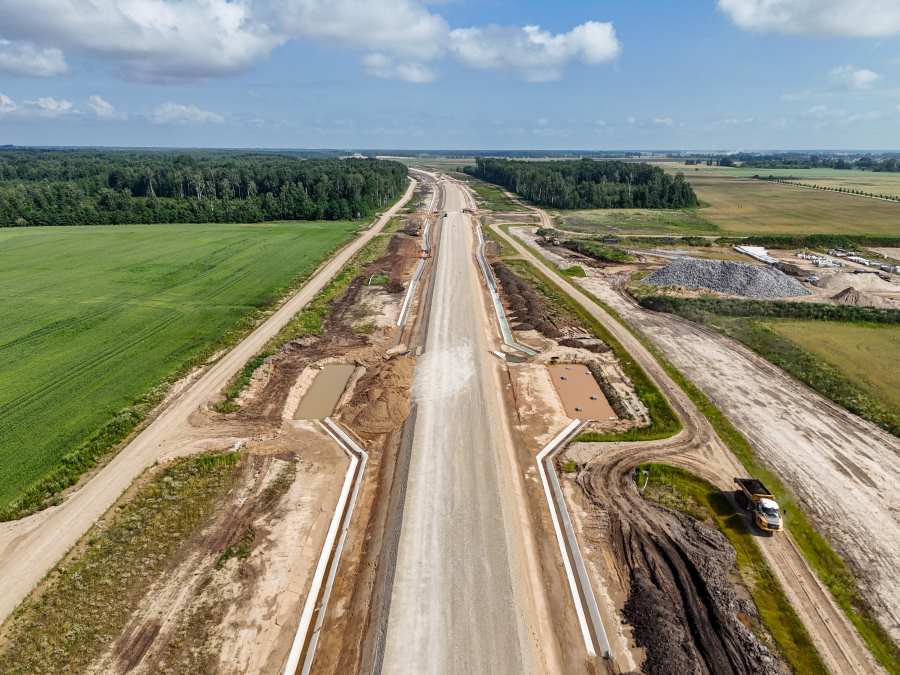
LTG Infra, the LTG Group company responsible for implementing the Rail Baltica project in Lithuania, and contractor HISK, which signed a EUR 126.9 million (VAT included) construction contract for the 12.3 km Berčiūnai–Joniškėlis section in Panevėžys District, are currently participating in a mediation process. The objective of the mediation is to resolve the dispute between the parties amicably, commence construction works on the section, and ensure the continued implementation of this strategic project. LTG Infra does not rule out the possibility of launching a new procurement procedure to select a contractor if the mediation process does not result in an agreement and construction works cannot be commenced.
“During the implementation of the Berčiūnai–Joniškėlis contract, under the previous trilateral project governance model involving the client, the contractor, and the joint venture RB Rail AS, obtaining the required technical documentation and construction permits took longer than anticipated before the procurement process was launched. In July, however, the key documentation necessary for construction was obtained and submitted to the contractor, who was formally informed that construction works could begin,” says Mindaugas Ivanavičius, Chief Rail Baltica Lithuania Officer.
According to him, in projects of this scale, such situations are typically addressed by reviewing construction schedules, adjusting deadlines, and proceeding with contract implementation.
However, a dispute arose between the contractor and the client regarding the timing of the preparation of technical documentation and the issuance of construction permits. In addition, the contractor submitted a claim, based on the provisions of the contract, seeking compensation for costs incurred in connection with contract execution. In line with the requirements of international funding sources, LTG Infra is currently assessing whether all claimed costs are justified and whether European Union and national funding have been used appropriately.
“In our view, the technical and organisational issues are resolvable. Through the mediation process, we continue to propose compromise solutions that would allow the construction contract to be preserved, avoid lengthy litigation, and enable construction works towards the Latvian border in Panevėžys District to begin as quickly as possible,” says Ivanavičius.
LTG Infra does not exclude the possibility that the mediation process may fail to produce an agreement. In such a case, the company is prepared to take immediate action to ensure continuity of construction works and launch a new procurement procedure. As the technical documentation has already been prepared and construction permits have been obtained, works on this section could commence without delay. The construction contract is expected to be completed within two years from the start of works.
“At present, our clear priority is construction progress. Lithuania has secured funding for 114 kilometres of the Rail Baltica mainline and is seeking additional investment under the next European Union financial framework. Construction progress is therefore important not only for this particular contract or section, but also for the future financing prospects of the entire project,” emphasises Ivanavičius.
At present, HISK is also implementing works on the Šėta–Ramygala section and the Kaunas (Palemonas)–Šveicarija section.
Construction and design activities are ongoing across other sections of Rail Baltica in Lithuania, including the construction of the upper track structure and turnout manufacturing, modernisation works on the Poland/Lithuania border–Kaunas section, the development of the signalling subsystem for this section, and the design of individual project assets.
“We work closely with contractors who are important partners in delivering a project of strategic significance to Lithuania and the Baltic region. The Rail Baltica programme consists of more than 100 individual project activities, and each of them must progress as smoothly and efficiently as possible,” says Chief Rail Baltica Lithuania Officer.
To ensure the project’s resilience to risks, LTG Infra previously divided the construction of the mainline into separate sections, ensuring that disruptions affecting one contractor would not have a decisive impact on the work of other contractors or on the progress of the project as a whole.
Rail Baltica is a strategic project for both the LTG Group and the European Union and is the largest railway infrastructure project in the history of the Baltic States. Once completed, it will deliver an electrified European standard gauge railway line connecting Lithuania, Latvia, and Estonia with Central and Western Europe, strengthening regional integration, civil and military mobility, and the overall resilience of the transport system.
 LTG