LTG
2026-09-30
When the Light Turns Red: Who Decides to Stop a Train and How?
“Attention, attention... a vehicle is stranded at a level crossing.” Such a message can reach the Traffic Control Centre at any moment. In situations like these, there is no time for deliberation. Train traffic is halted immediately. The same approach applies when information is received about a suspicious object near the railway: safety comes first, and only then is the situation investigated.
Such caution is essential on the railway. A train cannot steer around an unexpected obstacle, and due to its immense mass, its braking distance can be considerable. Safe operations therefore depend not only on the train driver's reaction, but on an interconnected system involving drivers, station duty officers, train coordinators, Traffic Control Centre personnel, and automatic safety systems.
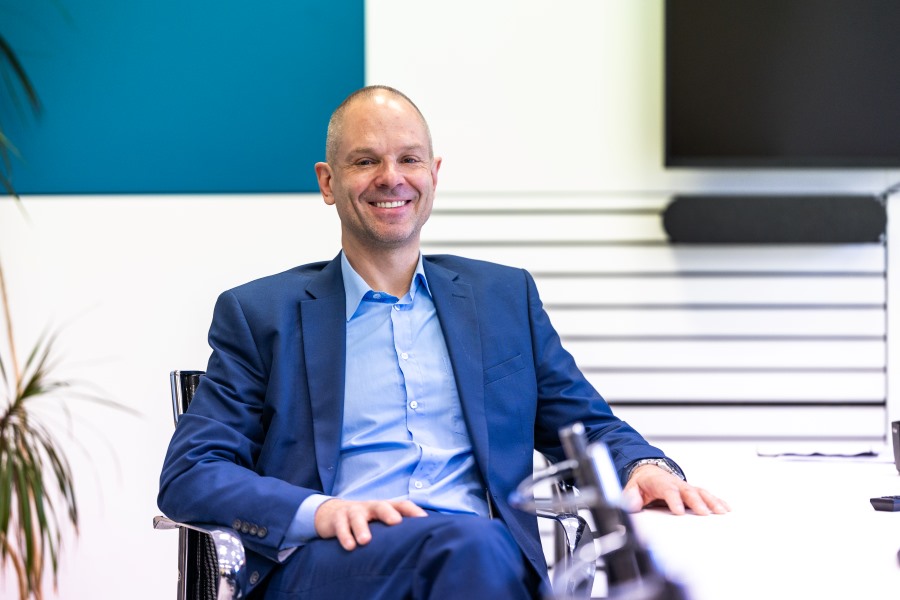
How this system works, who makes the decision to stop a train, and what would happen if the primary traffic management systems failed is explained by Albertas Karauskas, Head of Operations Coordination and Emergency Management at LTG Infra, who has worked in the railway sector for nearly three decades.
He began his career at Paneriai Station as a wagon brake operator and later worked in various traffic management roles. During that time, the railway changed significantly. Where traffic schedules were once drawn by hand on paper, today most operations are managed through digital systems from the Traffic Control Centre in Vilnius.
Yet one thing remains unchanged: while technology assists in decision-making, the ultimate responsibility in critical situations still rests with people.
Who Really Controls Train Traffic: People or Systems?
Safe railway operations rely on a combination of people, technology, and strict procedures. Systems are designed first and foremost to prevent dangerous situations from occurring.
For example, if a train is already occupying a section of track, or if a route has been set for another train, the system will not allow an operator to clear a signal. Safety systems also operate within the driver's cab. If the driver fails to respond appropriately to a signal, emergency braking may be activated automatically.
However, not every situation can be anticipated or managed automatically. When systems fail, are temporarily switched off for planned works, or when an unforeseen threat emerges, greater responsibility falls to people. In such circumstances, clear procedures and the principle that critical decisions must never depend on a single individual become particularly important.
Who Decides That a Train Must Be Stopped?
It depends on the situation. A driver may receive an instruction from the Traffic Control Centre or a station duty officer. However, the railway operates according to one fundamental principle: whenever there is reasonable doubt about safety, traffic is stopped first.
If information is received about a suspicious object near the railway, operations are not allowed to continue until someone determines whether it is dangerous. Train traffic is halted immediately, and the situation is assessed afterward.
Even if it later turns out that the object posed no threat, the decision is still considered correct. Services are resumed only after confirmation that it is safe to do so.
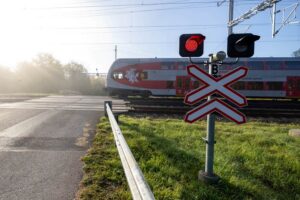
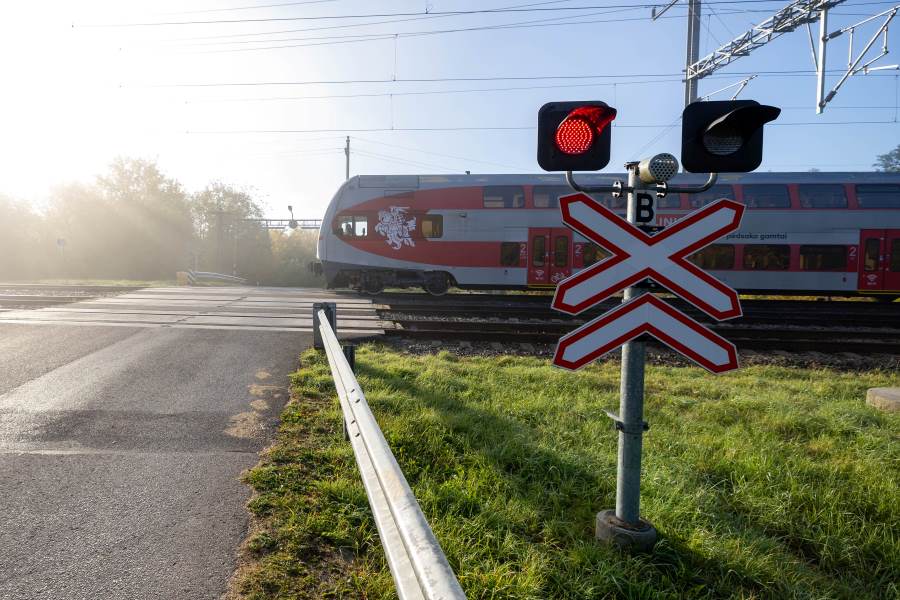
A similar approach is taken when an obstacle is spotted at a level crossing. Train drivers in the affected section are informed immediately. Based on the distance to the obstacle, train speed, and the train’s characteristics, the driver determines whether emergency braking is required.
When Does the System Stop a Train on Its Own?
Safety systems in the driver’s cab continuously monitor train speed and the driver’s response to signals. If a driver fails to start reducing speed when approaching a stop signal, the system can intervene and automatically apply the brakes.
Automation also oversees infrastructure. For example, if a switch is not correctly set and locked, the system will prevent a proceed signal from being displayed.
The principle is simple: if the system cannot confirm that an action is safe, it must prevent that action from taking place.
What Happens If the Traffic Management System Fails?
Train services do not necessarily stop. Instead, the method of organizing traffic changes.
If the main systems become unavailable, operations may switch to procedures based on telephone communication. In such cases, there is no room for improvisation. Strictly defined phrases are used, and every action must be confirmed.
A station duty officer coordinates a train’s departure with the duty officer at the neighbouring station. Once a train departs, its number and exact departure time are communicated. No other train may enter the same section until confirmation is received that the previous train has reached the next station.
This creates multiple layers of control: decisions do not depend on a single person, and every critical action is checked and confirmed by another employee.
So Even in a Digital Railway, Are Paper and Pencil Still Needed?
As paradoxical as it may sound, yes.
“When I worked as a train dispatcher, we drew schedules by hand,” recalls A. Karauskas. “Passenger trains were marked in red, freight trains in other colours. Today everything is visible in digital systems, but paper schedules and pencils have not disappeared.”
They remain part of the railway’s backup toolkit for exceptional situations. If the primary systems fail, traffic can still be managed using station duty officers, telephone communication, and paper schedules.
This is not just a theoretical contingency plan. Employees must be able to work without their usual digital tools because technology can fail, and systems sometimes need to be switched off for planned maintenance or upgrades.
What If Communication Is Lost Altogether?
Railway procedures also account for this scenario.
If communication between stations is completely interrupted, a special operating procedure comes into effect. The driver is issued an authorization stating that the train is being dispatched without normal communication channels. In such circumstances, the train must proceed with extreme caution.
In nearly three decades on the railway, A. Karauskas has never had to apply this procedure in a real situation.
“We have never been left completely without communication,” he says. “But the procedure must exist. Safety systems must be prepared not only for what is likely to happen, but also for the worst-case scenario.”
If the Central System Failed, Would Rail Traffic Across Lithuania Come to a Halt?
No.
A significant portion of Lithuania’s stations are managed from Vilnius through the Da Vinci system, but this system is linked to local station control systems.
If the central system were to fail, the local systems could continue operating. Station duty officers would be called in to take over traffic management on site.
In other words, railway safety is designed so that the failure of one element does not bring down the entire system or leave it without an alternative means of operation.
What Is the Most Difficult Part for People in Such Situations?
The greatest challenge is that decisions sometimes have to be made before all the information is available. This is why the railway follows a conservative safety principle: when in doubt, stop the process rather than take a risk.
People can make mistakes, so the system is designed to ensure that a single error does not lead to an accident. This is achieved through automation, cross-checking by multiple employees, standardized communication, and strict procedures.
Many railway safety rules that are now taken for granted were introduced after analyzing past accidents and their causes.
That is why employees train for scenarios they may never encounter in real life. The Traffic Control Centre operates a Da Vinci training module that replicates an environment closely resembling the real system. Employees can practice managing complex and rare situations without risking the safety of actual trains and passengers.
Safety systems require substantial investment, yet their value is not always easy to demonstrate through traditional performance indicators. Unlike a ticket sold or freight transported, the result of safety measures is often measured by what did not happen.
Safety systems do not generate revenue directly. What they do is help prevent the kinds of events no one wants to see in statistics.
And perhaps that best captures the purpose of the people responsible for safety: the greatest success of their work is the accident that never happened.
Atgal
Pirmyn
Atgal
Pirmyn